Tsingy de Bemaraha National Park
Tsingy de Bemaraha is in the Melaky region of western Madagascar, near the village of Bekopaka, which serves as the main gateway to the park. It lies approximately 200 kilometres north of Morondava by road, although the journey takes considerably longer than the distance suggests.
The protected landscape covers limestone plateaus, dry forests, caves and the Manambolo River Gorge. Its geological formations and biodiversity make it one of Madagascar‘s most important conservation areas.
How to Get to Tsingy de Bemaraha
Most visitors travel from Morondava to Bekopaka by four-wheel-drive vehicle. The journey is over rough dirt roads and involves crossing the Tsiribihina and Manambolo rivers by ferry. Depending on road conditions and ferry operations, the transfer can take most of a day.
Visitors should arrange transport in advance and allow enough time for the journey. Depending on seasonal access, the park is also accessible from other parts of western Madagascar including Antsalova.
Top Attractions in Tsingy de Bemaraha
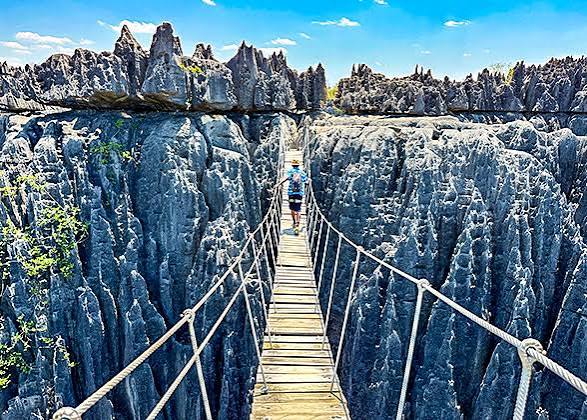
Grand Tsingy: The Grand Tsingy is the most dramatic and difficult part of the park. Its sharp limestone pinnacles, narrow passages, suspension bridges and high vantage points make it an exciting adventure for visitors who are comfortable with heights and physical activity.
Little Tsingy: This area has shorter and normally easier walking circuits. Visitors can search for wildlife and explore limestone formations, caves and viewpoints.
Manambolo River Gorge Boat or traditional pirogue trip down the river to see the towering limestone cliffs, caves and the surrounding natural landscape.
Limestone Caves: The park has caves and underground passages that have been formed over thousands of years by the erosion of limestone. Some of the guided tours include visits to these wonderful geological formations.
Dry Forests and Wildlife Forests and rocky habitats are home to lemurs, birds, reptiles and other wildlife, including Decken’s sifaka and a number of endemic species.
Things to Do in Tsingy de Bemaraha
Visitors can hike through the limestone formations, explore caves, walk over suspension bridges, take boat excursions on the Manambolo River and photograph the park’s unusual scenery.
Wildlife watching and birdwatching are also rewarding activities. Guided walks offer opportunities to learn about the area’s plants, animals, geology and conservation.
The Grand Tsingy requires reasonable fitness and a willingness to navigate exposed sections, ladders and bridges. Good footwear, water, sun protection and suitable clothing are a must. Visitors are required to follow the guide’s safety instructions during the whole excursion.
Best Time to Visit Tsingy de Bemaraha
The best time to visit Tsingy de Bemaraha is during the dry season, usually May to October. June through September is a especially popular time to visit the park and do some of the hiking loops .
The rainy season (typically November to April) can bring heavy rainfall, which can make roads and river crossings difficult or impassable. Access to the park and to the individual circuits can be limited depending on the conditions Please check opening dates and trail availability with Madagascar National Parks before travel.
Explore Tsingy de Bemaraha with Pearl Nature Holidays
Tsingy de Bemaraha is a memorable mix of adventure, wildlife and natural scenery. You can combine your visit with the Avenue of the Baobabs, Morondava and Kirindy Forest to experience more of western Madagascar.
Contact Pearl Nature Holidays to plan a Madagascar holiday that includes Tsingy de Bemaraha and other remarkable destinations across the island.
- Where is Tsingy de Bemaraha National Park located?
It is located in the Melaky region of western Madagascar, near Bekopaka, approximately 200 kilometres north of Morondava by road. - What is Tsingy de Bemaraha famous for?
It’s known for its sharp limestone spires, deep canyons, caves, suspension bridges and unique wildlife. - What is the difference between Grand Tsingy and Little Tsingy?
Grand Tsingy has more difficult hiking trails, exposed sections and suspension bridges. Little Tsingy has shorter (usually easier) walking circuits. - What animals can you see in Tsingy de Bemaraha?
Wildlife includes Decken’s sifaka, other lemurs, birds, reptiles and chameleons. Sightings depend on the season and conditions. - What is the best time to visit Tsingy de Bemaraha?
May to October is generally the best time of year, but June to September is the most popular time to visit the limestone formations. - How do you get to Tsingy de Bemaraha from Morondava?
Most visitors reach Bekopaka, the main entry point to the park, by four-wheel-drive vehicle on bumpy roads and two river ferry crossings. - How many days should you spend at Tsingy de Bemaraha?
Add to that the travel time from Morondava and at least two days in and around Bekopaka to explore the different circuits and enjoy a Manambolo River excursion.