Why Do Lions Climb Trees?
Lions are the world’s second biggest cats after tigers, This is because of their masclular bodies, powerful limbs and their ability makes them the giant kings of the savanna. Let us dig in further to know why lions climb trees, where to find the tree climbing lions , the best time to see tree climbing lions and how can one get to meet the tree climbing lions.
Picture yourself in an African wilderness, scanning endless savannah grasslands for wildlife and Suddenly, your guide points upward instead of ahead, revealing a magnificent lion comfortably stretched across thick tree branches. It feels almost unbelievable because most people associate tree climbing with agile leopards rather than powerful lions. Yet, this extraordinary sight is one of Africa's most memorable wildlife experiences.
If you dream of witnessing this incredible spectacle yourself, understanding why lions climb trees will make your safari experience even more meaningful. Moreover, knowing where to find these extraordinary cats greatly increases your chances of capturing unforgettable memories and breathtaking photographs.
And pearl nature holidays is here to make everything a walkover for you by arranging for you a thrilling East African safari with the tree climbing lions included in your itinary.
Why Do Lions Climb Trees?
Contrary to popular belief, lions do not climb trees simply for fun. Instead, tree climbing provides several survival advantages that help them thrive within specific environments.
Here are the primary reasons lions climb trees.
- Escaping Heat During Hot Days
Africa's midday temperatures can become extremely intense, especially across open savannah landscapes with limited natural shade. While many animals seek shelter beneath bushes or isolated trees, some lions climb into elevated branches where cooler breezes continuously circulate.
Higher positions often provide:
- Better airflow during scorching afternoons.
- Reduced exposure to heated ground surfaces.
- More comfortable resting conditions.
- Protection from relentless sunlight.
Consequently, lions conserve valuable energy before hunting later during cooler evening hours.
-
Avoiding Biting Insects
Another important reason involves escaping irritating insects.
The ground often contains countless biting flies, mosquitoes, ticks, and other pests that continuously disturb resting animals. Elevated branches usually experience stronger winds, making it difficult for insects to remain around resting lions.
By climbing trees, lions enjoy:
- Fewer biting flies.
- Reduced tick exposure.
- Less irritation.
- More peaceful resting periods.
As a result, they spend less energy constantly swatting insects away.
-
Watching Their Territory
Lions are highly territorial animals. Consequently, maintaining awareness of their surroundings remains essential for survival.
From elevated branches, lions gain impressive panoramic views of surrounding landscapes. This view point allows them to monitor approaching prey, rival prides, scavengers, and potential threats without unnecessary movement.
Tree climbing helps lions observe:
- Grazing antelope herds.
- Buffalo movements.
- Hyenas approaching carcasses.
- Competing lion prides.
- Human activity near protected areas.
Therefore, trees become natural observation towers across selected habitats.
-
Protecting Fresh Kills
Although leopards frequently drag prey into trees, lions rarely possess sufficient climbing ability for carrying heavy carcasses upward.
Nevertheless, after feeding nearby, lions sometimes climb surrounding trees while remaining close to valuable food sources. This elevated position enables them to monitor scavengers attempting to steal leftovers.
While they seldom store prey inside trees, their elevated viewpoint offers a strategic advantage.
-
Learning Through Generations
One fascinating discovery involves learned behavior rather than instinct alone.
Wildlife researchers believe tree climbing spreads through observation among young cubs. Cubs imitate experienced adults, gradually developing confidence climbing increasingly larger trees.
This explains why only certain lion populations regularly climb trees despite living in similar environments.
Behavior passed between generations often becomes a defining characteristic of specific prides.
Where Can You See Tree-Climbing Lions?
Tree-climbing lions in East Africa are found in Queen Elizabeth national park mostly ishasha valley in Uganda , lake Manyara national park in Tanzania and in Serengeti national park . These are the only destinations that offer higher chances of sighting the tree climbing lions.
Ishasha Sector, Uganda
Perhaps the world's most famous destination lies within the southern Ishasha Sector of Queen Elizabeth National Park.
Here, lions regularly lounge high inside giant fig trees during warm afternoons, shocking and entertaining visitors from around the world.
The Ishasha lions have become internationally recognized because this remarkable behavior occurs so consistently.
Visitors frequently observe:
- Adult males resting above branches.
- Lionesses relaxing together.
- Cubs learning climbing techniques.
- Family groups sharing single trees.
Lake Manyara National Park, Tanzania
Another renowned location is Lake Manyara National Park.
Similarly, lions here regularly climb acacia and mahogany trees, creating unforgettable photographic opportunities.
Scientists continue studying why these populations adopted tree climbing while neighboring lions rarely attempt similar behavior.
Can All Lions Climb Trees?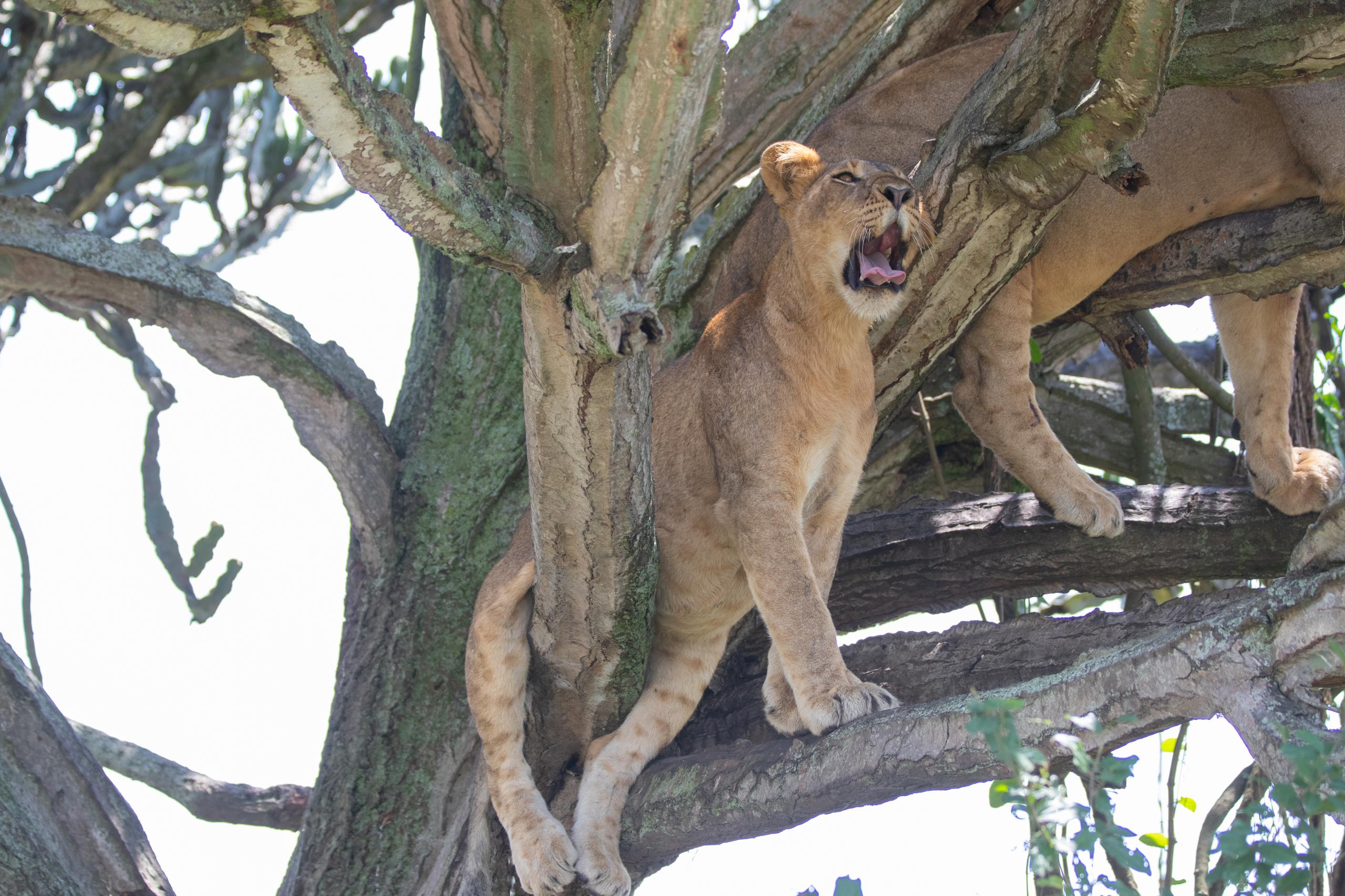
The simple answer is yes but not equally well.
All lions possess the physical ability to climb smaller trees under favorable conditions. However, most never develop sufficient confidence or experience because their habitats rarely require climbing.
Adult males generally struggle more than females because:
- They weigh considerably more.
- Large manes reduce mobility.
- Heavy bodies complicate balancing.
- Descending safely becomes challenging.
Lionesses and younger lions usually display greater climbing agility because they are lighter, more flexible and naturally more adventurous than the older males.
Are Lions Good Tree Climbers?
Compared with leopards, absolutely not.
Leopards evolved specifically for climbing, possessing stronger shoulder muscles, flexible spines, and remarkable balance.
Lions remain powerful runners and wrestlers rather than specialized climbers.
Consequently, climbing requires:
- Careful movement.
- Slow progress.
- Stable branches.
- Favorable tree structure.
This makes every successful tree-climbing lion especially fascinating.
Why Don't Most Lions Climb Trees?
Several factors explain this difference.
First, many habitats simply lack suitable climbing trees.
Secondly, climbing consumes considerable energy without guaranteeing significant rewards.
Thirdly, lions evolved primarily for cooperative hunting across open plains instead of navigating elevated branches.
Therefore, most prides naturally remain ground-based throughout their lives.
How Do Lions Climb Trees?
Unlike leopards that leap effortlessly upward, lions climb gradually.
They rely upon:
- Powerful hind legs.
- Sharp retractable claws.
- Strong forelimbs.
- Excellent body coordination.
Most lions first grip rough bark before slowly pulling themselves upward branch by branch.
Descending often proves considerably more awkward than climbing.
Do Lion Cubs Climb Trees?
Absolutely.
Young cubs naturally display curiosity.
They frequently experiment climbing fallen logs, leaning trunks, and smaller trees while playing.
These playful experiences strengthen muscles, improve coordination, and prepare them for future survival challenges.
Additionally, observing experienced adults helps cubs master climbing techniques safely.
Do Lions Sleep in Trees?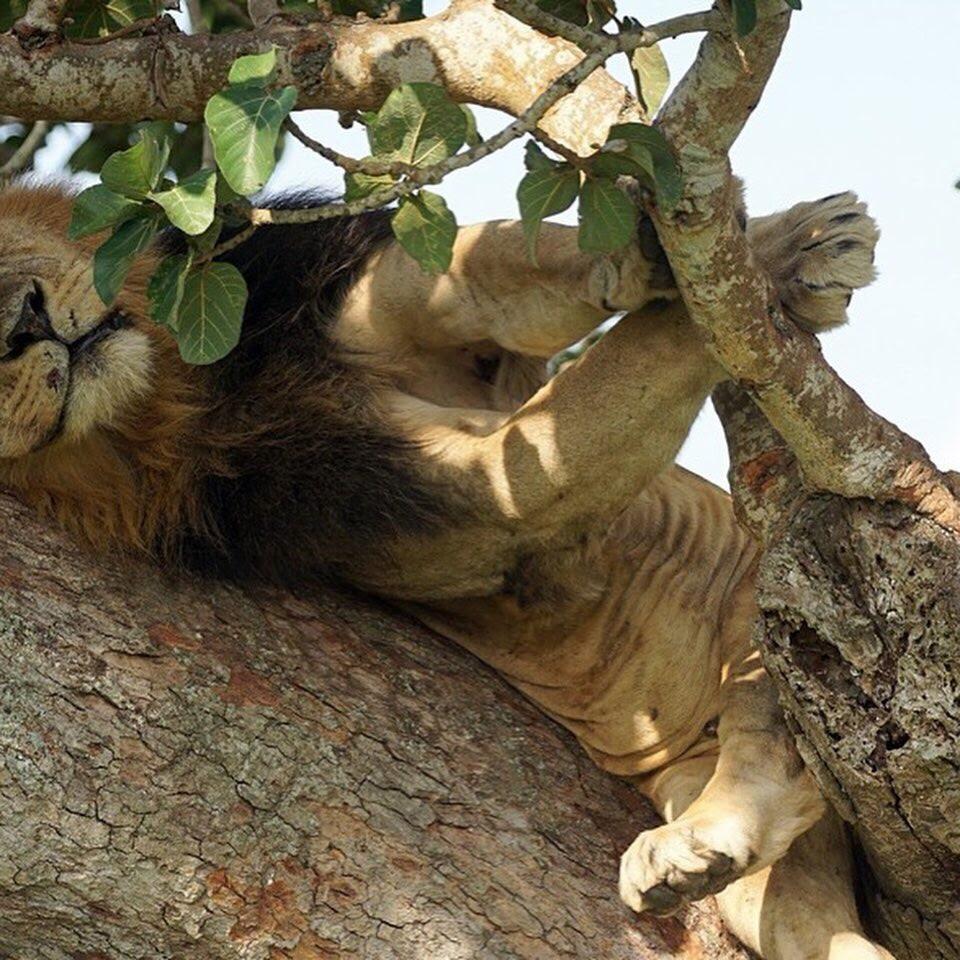
Yes, especially tree-climbing populations.
During hot afternoons, lions may sleep for several hours upon broad, sturdy branches.
Sleeping above ground offers:
- Cooler temperatures.
- Fewer insects.
- Better visibility.
- Increased comfort.
Watching an enormous lion peacefully sleeping above your safari vehicle remains unforgettable.
Are Tree-Climbing Lions Unique?
Yes they are very much because:
Only a small number of lion populations regularly display this remarkable behavior.
Consequently, seeing one represents a genuine wildlife privilege.
Professional photographers often travel thousands of kilometers specifically hoping for this extraordinary encounter.
Fascinating Facts About Tree-Climbing Lions
Here are several remarkable facts every safari traveler should know.
- Tree-climbing lions mainly occur in Uganda and Tanzania.
- Lionesses generally climb better than adult males.
- Cubs learn climbing through observation and practice.
- Lions climb mostly during hotter daytime hours.
- Strong breezes help reduce irritating insects.
- Elevated positions improve territorial surveillance.
- Tree climbing remains learned behavior rather than universal instinct.
- Every climbing lion creates exceptional photographic opportunities.
Why Should This Matter During Your Safari?
Understanding animal behavior transforms wildlife viewing from simple sightseeing into meaningful exploration.
Instead of merely spotting lions, you begin recognizing their decisions, adaptations, and remarkable intelligence.
Every lion resting above a tree branch tells a fascinating story about survival, environmental adaptation, and generations of learned behavior.
Consequently, your safari becomes richer because every wildlife encounter carries deeper meaning.
Tips for Seeing Tree-Climbing Lions
If witnessing this extraordinary behavior appears on your travel list, remember these practical recommendations.
- Visit during dry seasons for better wildlife visibility.
- Explore the Ishasha Sector with experienced guides and pearl nature holidays offers the best guides.
- Begin game drives during early mornings or late afternoons.
- Carry quality binoculars and camera equipment.
- Exercise patience because wildlife sightings remain unpredictable.
- Respect park regulations and maintain safe viewing distances.
- Listen carefully to your guide's local knowledge.
- Keep scanning tree canopies instead of only watching the ground.
Tree-climbing lions remind us that nature constantly challenges our expectations, rewarding curious travelers with unforgettable wildlife discoveries.
Although lions traditionally dominate open grasslands, certain populations have brilliantly adapted by using trees for comfort, cooling, protection, and improved surveillance.
Furthermore, these fascinating behaviors demonstrate how wildlife continuously responds to changing environments while passing valuable knowledge between generations. Therefore, the next time you explore Africa's breathtaking national parks, remember looking upward may reveal one of the continent's most extraordinary safari experiences.
Whether you visit Uganda's famous Ishasha Sector or Tanzania's Lake Manyara National Park, witnessing a majestic lion resting gracefully among towering branches becomes far more than a photograph. It becomes a lasting reminder that Africa's wilderness always holds surprising stories waiting for curious travelers like you to discover.
Every safari offers opportunities to learn, appreciate, and connect with wildlife in meaningful ways, making each journey truly unforgettable. Contact us at info@pearlnatureholidays.com or +256788506702 for effective planning of a thrilling tree climbing safari in East Africa.
Related Blogs

Explore the best of East Africa with Pearl Nature Holidays. Discover unforgettable safaris, mountain gorillas, the Big Five, and breathtaking landscapes across Uganda, Rwanda, Kenya, and Tanzania.
CONTACT INFORMATION
© 2026 Pearl Nature Holidays - Brand By Robylinks Solutions